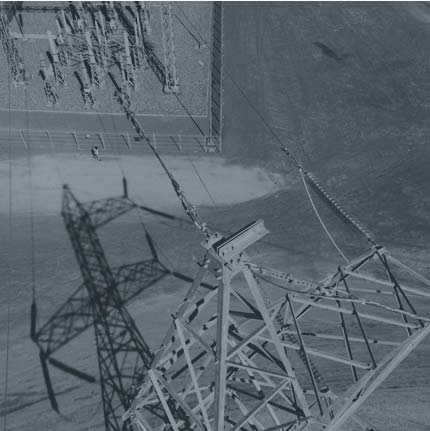
Power transmission and distribution lines form a critical part of the country’s infrastructure, carrying electricity across vast distances and often through challenging terrain. Ensuring the safety, reliability, and continuous operation of this network requires regular and accurate inspection of power lines, towers, insulators, and associated components.
Traditionally, power line inspections have relied heavily on manual methods, requiring personnel to physically traverse long stretches of transmission corridors and visually inspect infrastructure. This approach can be time-consuming, physically demanding, costly, and potentially hazardous. It can also make it difficult to identify small or developing defects, particularly when inspections cover hundreds of kilometres.
Unmanned Aerial Vehicles (UAVs), or drones, are transforming power line inspection by enabling high-resolution aerial data collection, faster coverage, and safer access to difficult-to-reach infrastructure. Equipped with high-definition cameras and thermal imaging systems, drones can capture detailed visual and thermal data that can be analysed to identify faults and support timely maintenance decisions.
Issues in Power Lines
▪️Miles of cables and Pylons to inspect ▪️The terrain is very uneven making physical inspection very hard, risky and time-consuming ▪️High risk to human life ▪️Inspection by naked eye which is not the best of methods ▪️The maintenance costs are high as the time for inspection is high as well ▪️The turnaround time for replacements are high ▪️Hairline fractures in the insulators cannot be captured by the physical inspection most of the time
Benefits of Using Drones
- Rapid deployment: Drones can be deployed from strategically selected locations close to the inspection corridor.
- High-resolution data capture: High-definition aerial photography and video provide detailed visual records of power lines, towers, insulators, and other components.
- Thermal inspection: Thermal cameras can help identify abnormal temperature patterns and potential hotspots that may not be visible through conventional visual inspection.
- Real-time monitoring: Live aerial feeds can enable inspection teams to monitor infrastructure remotely and assess potential issues during the flight.
- Reduced human exposure: Drones reduce the need for personnel to work directly around high-voltage infrastructure or navigate hazardous terrain.
- Improved inspection coverage: Large stretches of power lines can be surveyed efficiently, helping teams identify issues across extensive networks.
- Access to difficult locations: Drones can inspect infrastructure in hilly, forested, remote, and otherwise inaccessible areas.
- Targeted inspection: The ability to hover and manoeuvre around specific components allows inspectors to capture detailed imagery of areas requiring closer examination.
- Better maintenance planning: Detailed visual and thermal data can help utilities identify defects earlier, prioritise repairs, and make more informed maintenance decisions.
- Digital inspection records: Captured imagery and inspection data can be documented and compared over time, supporting condition monitoring and preventive maintenance.